
Startup GuideUpdated October 2, 20269 min read

How to Open a Pilates Studio in the GCC

Opening a pilates studio in the GCC is a 6 to 9 month build: trade license, Ejari or MOMRAH filing, visa quota, $50k to $200k in reformer capital, BASI or Polestar certified instructors, and a pre-launch booking page that converts before doors open. This guide is the entrepreneur-stage checklist for UAE, KSA, and Kuwait founders planning a 2026 launch.

L

LivWell

Livwell Team

How to Open a Pilates Studio in the GCC

TL;DR

  • - A GCC pilates studio costs $130k to $450k in 2026: $50k to $200k on reformers, $80k to $250k on fit-out
  • - UAE is a DET trade license plus Ejari and an investor visa quota; KSA is MOMRAH plus a Baladiya CR
  • - Reformer capital runs $7k to $25k per unit on a 4 to 8 reformer floor plan, with a separate mat studio
  • - Hire BASI, Polestar, Stott, or Romana's certified instructors at AED 8k to 18k per month
  • - Launch on Livwell's 14-day trial and book a Wellness Systems Audit so booking goes live 30 to 60 days pre-opening

Most GCC pilates studios that hit month 14 to 22 break-even picked the right trade license, sized reformer capital to a 4 to 8 unit floor, and turned on booking 30 days pre-opening

Opening a pilates studio in the GCC is a 6 to 9 month build across licensing and visas, fit-out and reformer capital, and instructor hiring with a pre-launch booking system. Most first-time founders underestimate at least one, and the cost of getting it wrong is 30 to 90 days of extra rent on a space that cannot legally open. This is the entrepreneur-stage checklist for a 2026 launch, grounded in UAE, KSA, and Kuwait regulation and the launch math that turns a pre-opening waitlist into a paid roster on day one.
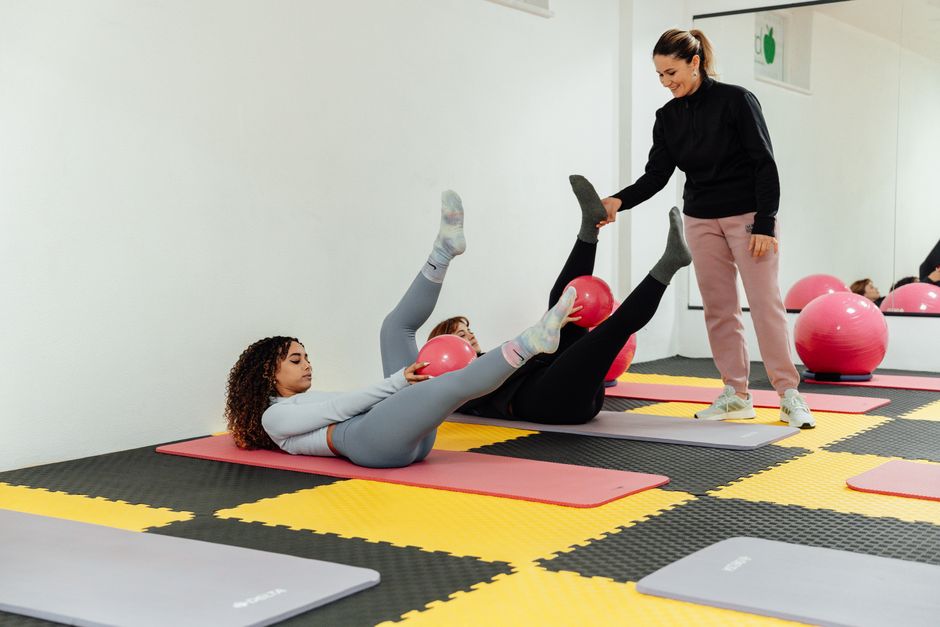
pilates studio trade license and Ejari paperwork during GCC setup

Trade licenses and visas: UAE vs KSA vs Kuwait

Jurisdiction decides where you open a bank account, how many visas you can issue, and how fast you can scale. In the UAE the standard path is a commercial trade license from the Department of Economy and Tourism in Dubai, the Department of Economic Development in Abu Dhabi, or the equivalent free zone authority if you are inside DMCC, RAKEZ, or Sharjah Free Zone. The activity is registered as 'Sports and Fitness Services,' signed against a tenancy contract you register with Ejari in Dubai or Tawtheeq in Abu Dhabi before applying for the establishment card and investor visa quota.

KSA needs a Commercial Registration from the Ministry of Commerce, a Municipal License from the Baladiya, and a sports and fitness permit from MOMRAH after the fit-out is signed off. The visa quota comes through the Ministry of Human Resources and Social Development, with your Nitaqat band locking in once the first instructors are on payroll. Kuwait is the third path: a commercial license from the Ministry of Commerce and Industry, a Municipality fitness permit, Civil ID for foreign instructors, and a Kuwaiti sponsor or a 100 percent foreign-owned license under the new Direct Investment Law.

Reformer capital and the 4 to 8 reformer floor plan

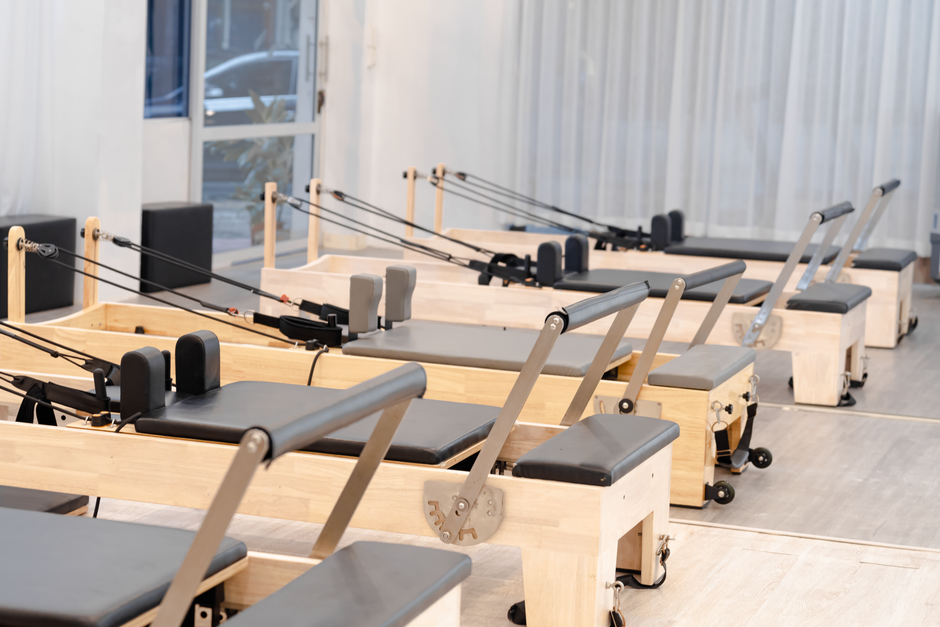
Reformer capital decides your break-even month more than any other line item. A Balanced Body Allegro 2 with tower lands at $7k to $9k per unit, a Stott SPX or Merrithew V2 Max runs $12k to $15k, and a BASI Systems stainless steel reformer with jumpboard and tower runs $18k to $25k. A 4 to 8 reformer floor plan is the GCC sweet spot: four is the minimum to run a private plus group stack without conflict; eight is the upper end of what one instructor can supervise. The mat studio is a revenue line. A 6 to 10 mat floor running mat, pre-natal, and senior pilates at AED 60 to 120 per drop-in and AED 350 to 700 per 10-class pack fills the morning slots the reformer fleet cannot cover.
reformer fleet arranged inside a GCC pilates studio fit-out

Insurance, liability, and equipment cover

Insurance is a hard prerequisite, and your landlord will block key handover until you bind three policies. Public liability covers third-party injury at $1M to $5M aggregate. Professional indemnity covers instructor error during a private or semi-private session. Equipment cover protects your reformer fleet against fire, flood, and accidental damage for the first 24 to 36 months. A combined GCC package from Marsh, Sukoon, or Bupa Arabia runs AED 12k to 40k per year. Read the instructor exclusion clauses: a policy that excludes a BASI-certified instructor at a Stott reformer because the cert mismatch is not on the schedule does not pay out on the first claim.

Instructor hiring: BASI, Polestar, Stott, and Romana's

The four certs GCC studios hire against are BASI Pilates, Polestar Pilates, Stott Pilates (Merrithew), and Romana's Pilates. All four are taught in Dubai and Riyadh, and all four map onto a booking page if the platform recognizes them as a first-class field on the instructor record. Salary for a full-time certified instructor in Dubai runs AED 8k to 18k per month depending on cert and private session revenue share. In KSA and Kuwait add 10 to 25 percent for housing or transportation allowance.

Hire one senior lead instructor at the top of the band to set the curriculum and run the first 90 days, then two to three mid-band instructors you can train into the senior role over months 6 to 12. The clean setup on Livwell is one lead, two to four staff instructors, and a pool of certified freelancers marked with their cert and reformer specialty on every shift.

Pre-launch marketing: booking goes live before doors open

Pre-launch marketing starts during fit-out, not at opening. The standard GCC play is a waitlist on Instagram, a founder-member deposit window, and a booking page that takes a real payment against a real slot, not an email form. Livwell's 14-day free trial gives you booking, payments, instructor scheduling, and the member portal live on a subdomain in day one, and the 48-hour Wellness Systems Audit maps your class taxonomy, price ladder, and member journey before you go live. A waitlist of 200 to 400 emails captured over 30 to 60 days in Dubai Marina, Riyadh Al Olaya, or Salmiya converts to a founder-member deposit window of 40 to 80 members paying AED 100 to 200 each.
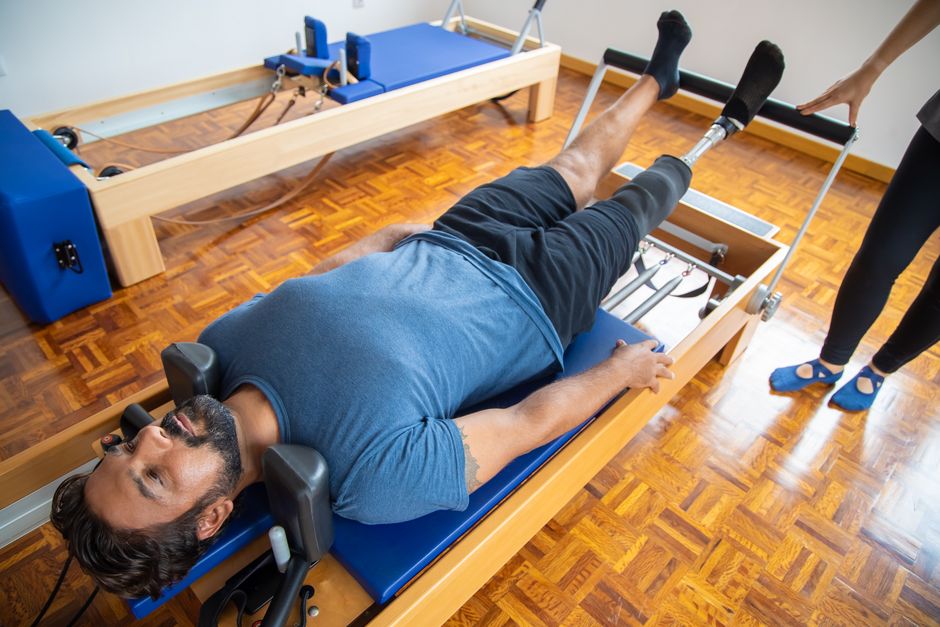
pre-launch booking page running on Livwell for a GCC pilates studio opening

First 90 days: the trial-to-membership conversion

The first 90 days are a conversion funnel, not a marketing campaign. Week 1 to 2 is founder-member deposits, week 3 to 6 is intro packs (a 3-class or 5-class pack at a discounted rate that expires in 30 days), and week 7 to 12 is the first renewal window where intro packs convert to recurring monthly memberships. The target by day 90 is 25 to 40 paid recurring memberships at AED 600 to 1,200 per month, with a 60 to 90 paid member base by month 6. Class taxonomy decides whether the funnel works. A clean taxonomy is mat pilates, group reformer (max 8 clients), private reformer, duet reformer, and tower pilates, each with a defined price, cap, and instructor. Studios that skip the taxonomy until after launch end up with a generic 'pilates class' at one price, one cap, and one instructor, which leaves the highest-paying clients under-served.

Common mistakes that delay break-even

The most expensive mistakes new studios make are skipping class taxonomy, underestimating instructor payroll, freezing VAT registration, and over-sizing the reformer fleet. Instructor payroll at 35 to 45 percent of revenue is the line founders miss most. VAT registration is mandatory once you cross AED 375k in the UAE or SAR 375k in KSA. An 8 to 12 reformer flagship with no founder-member window takes 8 to 14 months longer to break-even than a 4 to 6 reformer boutique that pre-sold 60 memberships on day one.

Most GCC pilates studios that hit month 14 to 22 break-even picked the right trade license, sized reformer capital to a 4 to 8 unit floor, and turned on booking 30 to 60 days before opening. Livwell is built around that launch workflow. The 14-day free trial gives you booking, payments, instructor scheduling, and the member portal live before the doors open, with AED as a first-class currency and Mada, Knet, tabby, SADAD, and Apple Pay wired in as native payment methods. The 48-hour Wellness Systems Audit maps your class taxonomy, price ladder, and pre-launch member journey in writing, so by the time you unlock the door you are running a system, not a WhatsApp group.

Frequently asked questions

{"question": "How much does it cost to open a pilates studio in the GCC?", "answer": "A GCC pilates studio typically costs $130k to $450k to open in 2026. The split is roughly $50k to $200k on reformers and equipment, $80k to $250k on fit-out and trade license, and $20k to $60k on visas, deposits, and pre-launch marketing. A 4 to 6 reformer boutique in Dubai Marina or Riyadh Al Olaya runs the lower end; an 8 to 12 reformer flagship with a mat studio and sauna in DIFC or King Abdullah Financial District runs the higher end."}
{"question": "What licenses do I need to open a pilates studio in the UAE vs KSA?", "answer": "In the UAE the standard path is a commercial trade license from the Department of Economy and Tourism in Dubai, the Department of Economic Development in Abu Dhabi, or the equivalent free zone authority if you are inside DMCC, RAKEZ, or Sharjah Free Zone. The activity is usually registered as 'Sports and Fitness Services.' You sign a tenancy contract and register it with Ejari in Dubai or Tawtheeq in Abu Dhabi before applying for the establishment card and investor visa quota. In KSA you instead need a Commercial Registration from the Ministry of Commerce, a Municipal License from the Baladiya for the premises, and a sports and fitness permit from the Ministry of Municipal and Rural Affairs (MOMRAH). The CR activity code covers physical fitness centers and personal training services, and the visa quota comes from the Ministry of Human Resources and Social Development under Nitaqat band rules."}
{"question": "How much does reformer capital cost for a GCC pilates studio?", "answer": "Reformer capital runs $7k to $25k per reformer depending on brand and spec. A Balanced Body Allegro 2 with tower runs around $7k to $9k landed; a Stott SPX or Merrithew V2 Max runs $12k to $15k; a BASI Systems stainless steel reformer with a full carriage and jumpboard runs $18k to $25k. A 4 to 8 reformer floor plan is the GCC sweet spot: enough to run back-to-back private and group reformer sessions, small enough to keep utilization above 60 percent in months 6 to 18."}
{"question": "How do I hire certified pilates instructors in the GCC?", "answer": "Recognize the four certs GCC studios hire against: BASI Pilates, Polestar Pilates, Stott Pilates (Merrithew), and Romana's Pilates. All four are taught in Dubai and Riyadh, and all four map cleanly onto a booking page. Salary for a full-time certified instructor in Dubai runs AED 8k to 18k per month depending on cert, mat and reformer competency, and private session revenue share. In KSA and Kuwait add 10 to 25 percent for housing or transportation allowance."}
{"question": "What insurance do I need for a pilates studio in the GCC?", "answer": "You need three policies before you take your first paying client. Public liability covers third-party injury on the premises and is usually required by your landlord at $1M to $5M aggregate. Professional indemnity covers instructor error during a private or semi-private session. Equipment cover protects your reformer fleet against fire, flood, and accidental damage. A combined GCC fitness studio package from a broker such as Marsh or Sukoon runs AED 12k to 40k per year depending on reformer count and session volume."}
{"question": "How does Livwell's 14-day trial work as a pre-launch marketing tool?", "answer": "You set up Livwell during fit-out, before the doors open. The 14-day free trial gives you booking, payments, instructor scheduling, and the member portal live on a subdomain in day one. You open the booking page to your waitlist 30 to 60 days before launch, capture AED 100 to 200 founder-member deposits, and convert those deposits into month-one memberships on day one of operation. By the time you unlock the door you have a roster, a payment profile, and a renewal date on every member."}
{"question": "What is the first 90 days checklist for a new pilates studio?", "answer": "Week 1 to 2: trade license, Ejari or MOMRAH filing, visa quota, and reformer purchase order. Week 3 to 6: fit-out, insurance bind, instructor hiring, and Livwell setup. Week 7 to 10: pre-launch marketing, founder-member deposit window, and soft launch with 20 to 30 founding members. Week 11 to 13: public opening, group reformer schedule, and first renewal window. The studio should be running 25 to 40 paid memberships by day 90 and 60 to 90 by month 6."}
{"question": "What are the most common mistakes opening a pilates studio in the GCC?", "answer": "The most expensive mistakes are skipping the class taxonomy until after launch, underestimating instructor payroll, and freezing VAT registration. Class taxonomy decides whether your reformer slots cannibalize each other or stack: mat, group reformer, private reformer, duet, and tower each need a defined price and a defined cap. Instructor payroll at 35 to 45 percent of revenue is the line item founders miss most. And if you cross AED 375k in taxable supplies in the UAE or SAR 375k in KSA, VAT registration is mandatory and the clock starts from your first invoice, not your first profitable month."}

Run your pilates launch on Livwell

Start with the 14-day free trial and book a 48-hour Wellness Systems Audit before you open the doors.

Follow Livwell on Google

See Livwell articles more often in Google Search

Add golivwell.com as a preferred source on Google and our guides will surface more often in your Top Stories and AI answers.

Add Livwell as a preferred source

Comments

No comments yet. Be the first to share your thoughts.