

Pilates studio management software is the operating layer that runs mat, Reformer, Tower, Cadillac, and Springboard bookings, instructor scheduling with certification levels, member CRM with fitness-goal tags, multi-location reporting, and renewals inside one platform. The point is to replace a booking app, a Reformer slot spreadsheet, and a WhatsApp class thread with one system that shares one member record, one payment profile, and one source of truth for the studio. Most GCC pilates studios past two Reformers hit the same wall: the booking app does not understand equipment type, the spreadsheet does not understand class capacity, and the WhatsApp thread does not understand renewals.
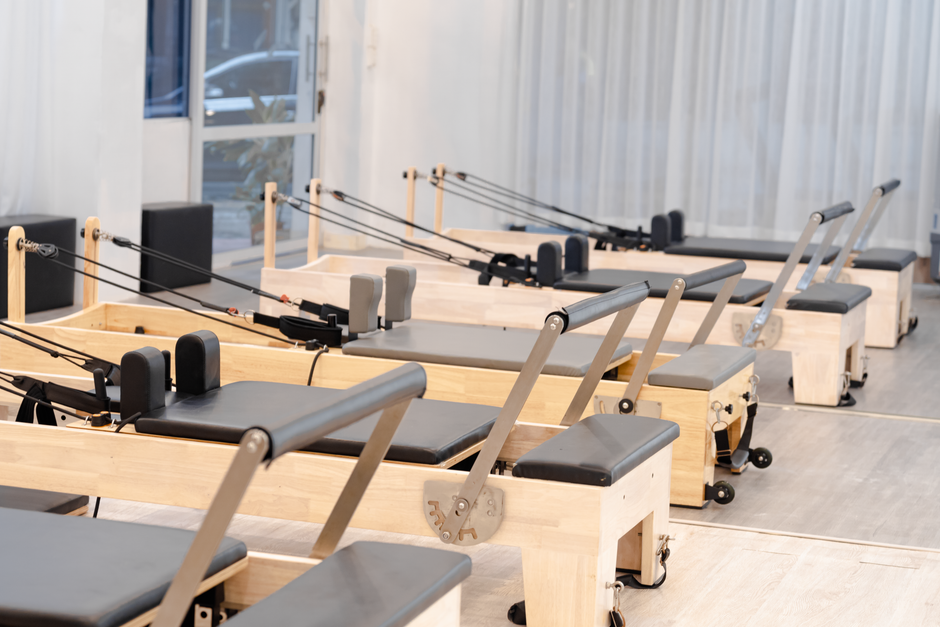
Class taxonomy for mat, Reformer, Tower, Cadillac, and Springboard
Class taxonomy is the first thing that breaks in a pilates studio. Mat, Reformer, Tower, Cadillac, and Springboard are not five flavors of one class type; they are five distinct operations. A mat class needs floor space and a headcount. A Reformer session needs a Reformer number per slot. A Tower session needs a Tower with springs and a bar. A Cadillac needs a Cadillac frame. A Springboard session needs a wall-mounted Springboard. Software that treats all five as one generic slot makes your front desk remember which equipment goes where.
The clean version is one taxonomy where each session declares its equipment type, capacity, instructor certification, and duration. Mat classes get a headcount. Reformer, Tower, Cadillac, and Springboard sessions get a machine count. A member booked into a mat at 9am and a Reformer at 10am does not double-count against capacity, because the equipment type differs.
Reformer bookings by slot, not by class
Reformer booking is the unit a pilates studio sells for its premium tier, not a class slot. A Reformer has a number, a maintenance date, and a slot per session. Software that treats every Reformer as a generic class slot forces the front desk to assign machines on a whiteboard and your member to argue when their booked Reformer is double-assigned. The platform should let you set per-Reformer capacity per session, lock a Reformer number when booked, and release it on cancel or no-show.
In practice, that is a Reformer calendar where each block has a name (Reformer basics, Reformer flow, Reformer advanced, prenatal Reformer), a machine count, an instructor, and a price that differs by member type. Drop-ins pay a higher per-Reformer rate, and prenatal members get a priority window on the lowest-spring Reformers.

Instructor scheduling with certification levels
Instructor time is the most expensive line on your P&L and the easiest to schedule wrong. Mat-certified instructors only get mat classes. Reformer-certified instructors only get Reformer sessions. Tower, Cadillac, and Springboard certifications are tracked separately, and the scheduler blocks an unqualified instructor from a class type they are not certified for. The software should hold a current certification per instructor per equipment type, an expiry date, a sign-off, and a member-visible profile.
For GCC studios running Ramadan, summer, and back-to-school schedules, the calendar should let you set season templates that swap in and out on a date. Instructors see their week on mobile, mark availability, and swap with another qualified instructor when they cannot make a session. The booking page hides a class if no qualified instructor is scheduled, so the front desk never books a class you cannot run.
Member CRM with fitness-goal tags and progress notes
A pilates studio does not make money on the signup; it makes money on the renewal at month three, six, and twelve, plus the upgrade from mat to Reformer. Software that treats every member as a single record leaves the upgrade path to a manual follow-up. The right setup is recurring memberships with a renewal date, renewal price, an auto-charge attempt on AED with Mada or Knet, and a member CRM that holds fitness-goal tags and progress notes.
Pre-natal, post-natal, rehab, athletic, and senior are first-class tags that filter classes a member can be booked into. Progress notes are timestamped, instructor-bound, and visible in English or Arabic. The instructor sees the previous note before the session starts, so a member returning after a post-natal block does not have to repeat their history.
Multi-location reporting across UAE and KSA branches
Multi-location reporting is the second reason a pilates studio moves off a single spreadsheet, after the first branch opens in Abu Dhabi. You should see class fill rates, instructor utilization, renewal rates, and AED revenue per branch across Dubai, Abu Dhabi, Riyadh, Jeddah, and Khobar from one dashboard. The software should let you set per-branch pricing, hours, equipment inventory, and staff without duplicating the member record.
Cross-branch memberships are recognized, so a member who signs up in Dubai and books a Reformer in Riyadh is one record and one wallet. Finance sees consolidated AED revenue across UAE and KSA with VAT-ready reporting for the UAE branch and ZATCA-ready reporting for the KSA branch.
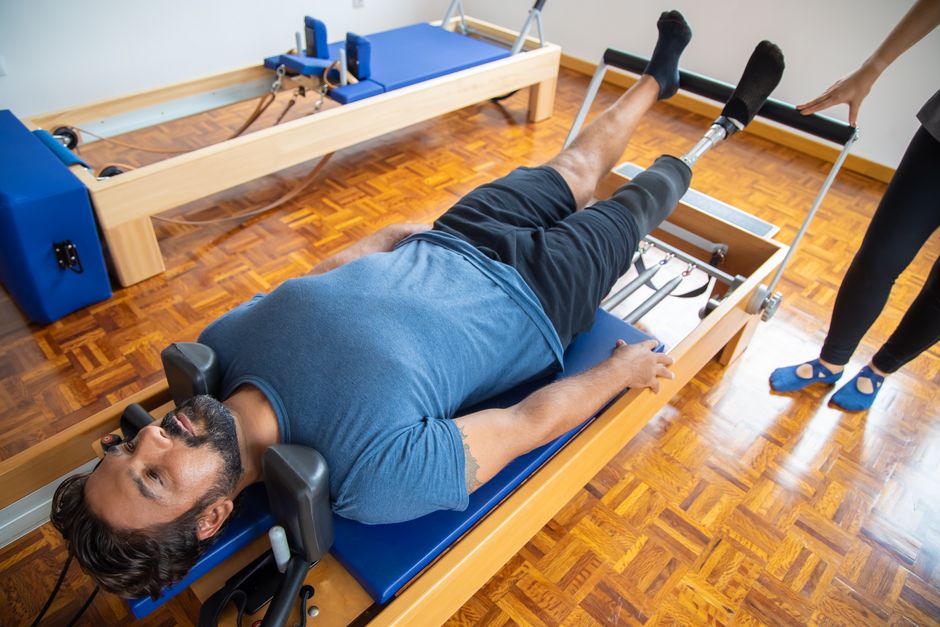
Mat vs Reformer handling in one calendar
Mat and Reformer are not two studios inside one pilates studio; they are two products on one calendar. A member might do a 9am mat and a 10am Reformer. A booking system that flattens both into one class slot double-counts the member against capacity and forces the front desk to clean the calendar by hand. The clean version is two slot types, one calendar, one member record, so the same member can be in a mat at 9am and a Reformer at 10am without flagging a duplicate.
Mat slots have a headcount. Reformer slots have a machine count. Tower, Cadillac, and Springboard slots have their own machine count. The calendar renders all five in one view, with a color per equipment type, so the founder sees the week at a glance.
Livwell vs generic gym software for pilates studios
Generic gym software treats every session as a class booking and every instructor as interchangeable. That works for a fitness studio running group classes. It does not work for a pilates studio running mat vs Reformer, certification levels, equipment maintenance, member goal tags, and multi-location reporting across UAE and KSA. The seams show up the first time you try to book a Reformer number or read a progress note.
Livwell is built around those workflows. Pricing is $79 per month for Starter, $199 per month for Growth, and $399 per month for Scale, with a 14-day free trial on all plans. AED is a first-class currency, Mada, Knet, tabby, SADAD, and Apple Pay are wired in as native payment methods, and the portal renders in 7 locales including Arabic with full RTL support. The 4-week migration plan is run by our team, and the entry point is a 48-hour Wellness Systems Audit that maps your current mat, Reformer, and instructor flows. If your pilates studio is past one Reformer, one instructor, and one currency, the question is not whether you need pilates studio management software; it is whether you want one platform or five tools and a WhatsApp thread.