

Pilates membership management is the operating layer that turns a class-purchase into a renewable relationship: auto-renew that respects GCC consumer protection norms, class-pack credits with rolling expiry, a freeze-for-travel policy, and renewal rate KPIs that surface churn early. Studios past one reformer room run a broken stack: a booking app, a separate subscription tool, a WhatsApp group for top-ups, and a spreadsheet for freezes. The result is 8-15% monthly churn on price changes and renewal rates below 60% inside 18 months. Studios that pull all of this into one member record hold renewal rates above 75%.
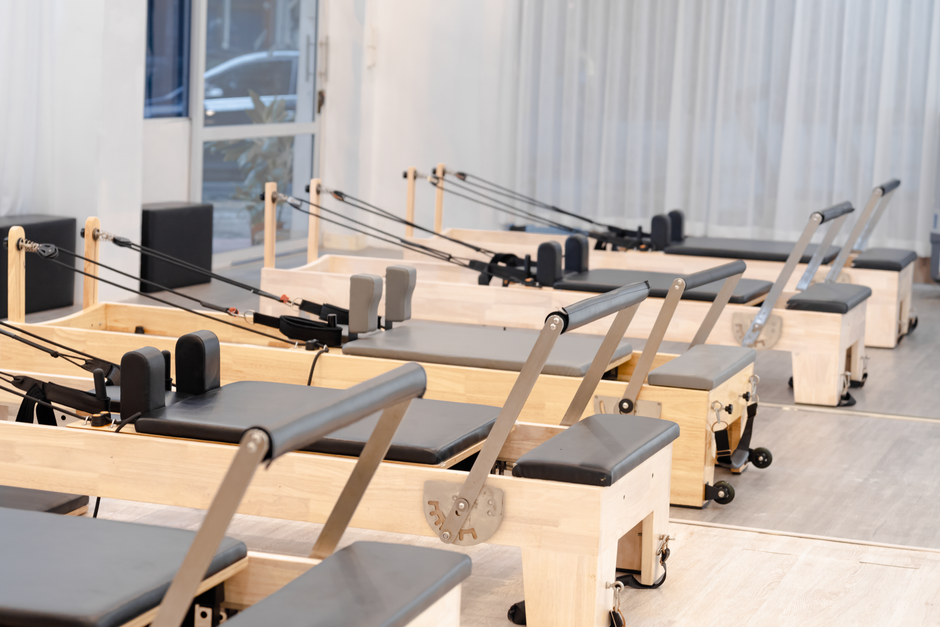
Auto-renew and grace periods that match GCC consumer norms
Auto-renew is the single highest-leverage setting in pilates membership management. A studio running 300 active members on auto-renew with a real grace window holds 8-12 points more annual revenue than manual renewals, because manual renewals leak members on every forgotten card and price-hike surprise. The working GCC baseline is a 14-day reminder cadence, a 7-14 day grace window after a failed charge, and a pause-not-cancel state at the end of grace.
In practice: send a 14-day reminder, a 7-day reminder, attempt the charge on the renewal date, and if it fails, enter the grace period with email and SMS telling the member how to update the card. Livwell ships this as the default auto-renew configuration on every plan, with the grace window configurable per tier and per payment method, since Mada and Knet failure rates differ from card-on-file rates in the Gulf.
Class-pack credits: rolling expiry beats fixed expiry
Class-packs are how GCC pilates studios convert a hesitant first-timer into a regular, and the expiry rule is the part that quietly wins or loses the relationship. Fixed-date expiry (the pack expires December 31) creates a December burnout and a January empty reformer room, and members who do not finish the pack feel cheated at renewal time. Rolling expiry (90 days from purchase, or 90 days from first use) ties the credit to the member, not the calendar, and consistently outperforms fixed expiry on member retention in the GCC cohorts we have audited.
The mechanic is straightforward: every class-pack has a credit count, an expiry rule, and a per-class deduction. The system should also let a member carry an unused class forward when they renew, and flag any pack that drops below two unused credits so the front desk can prompt a top-up before the member lapses. Livwell treats class-packs as a first-class record attached to the member, not a note on a booking, which is what makes the rolling expiry and the carry-forward rules actually enforceable at the door.

Freeze-for-travel, summer, and Ramadan
A freeze policy is non-negotiable for GCC pilates studios. Members travel in summer for 4-6 weeks, adjust schedules during Ramadan, and expect a pause that does not cost them their rate or their class-pack balance. A studio that does not offer a real freeze loses those members at the next price-hike conversation, and the freeze-to-cancel ratio is one of the strongest leading indicators of churn we track.
The default in Livwell is a freeze of up to 30-90 days per year, configurable per tier, with any reason allowed and the renewal cycle preserved. A member who freezes in July for a Europe trip resumes in August at the same rate, the same tier, and the same class-pack balance, and the renewal date moves forward by exactly the number of frozen days. This is the part that requires the freeze to be a state on the membership record, not a manual edit on a spreadsheet, because a manual edit drifts the renewal date and produces a confused member at the next billing cycle.
Family, couple, and corporate tier structures
Family and couple tiers are how GCC pilates studios turn a single member into a household relationship, and corporate tiers are how they turn a single studio into a B2B revenue line. The three tier shapes look the same on the surface and are very different underneath. A family tier links 2-4 member records under one billing profile with a discount on the second and third member. A couple tier is the same shape for two members. A corporate tier is a billing relationship with a company, with seats allocated to named employees and a separate renewal cycle that aligns to the corporate fiscal year.
What makes this work in software is a single member record that can belong to one billing profile and one household profile at the same time, with separate reporting so finance can see household revenue and corporate revenue as distinct lines. Livwell supports all three shapes on the Growth and Scale plans, and the corporate tier ships with seat-level usage reporting so the HR team at the client company can see utilization without seeing personal health data.
Renewal rate KPIs a pilates studio should actually track
Annual renewal rate is the headline number: members who renewed in the last 12 months divided by members whose renewal was due, with a healthy GCC pilates studio landing at 75% or higher. Below 70% the studio is leaking faster than it acquires, and the gap shows up in member lifetime value within two renewal cycles. The supporting KPIs are monthly churn rate (target under 5%), freeze-to-cancel ratio (target above 4:1, meaning for every member who freezes and cancels, four freeze and resume), and dunning recovery rate (target above 60%).
These four numbers together are the operating dashboard. A studio watching only monthly churn misses the leading indicators. A studio watching all four can tell whether a bad month was a price-hike reaction, a summer travel dip, or a payment-method issue, and can act on each one differently. Livwell surfaces all four on the Growth and Scale dashboards, with the member-level detail behind each number so the front desk can act on a specific account, not a chart.
Dunning on Mada, Knet, tabby, and Apple Pay
Dunning is the part of pilates membership management that decides whether a failed payment becomes a renewed member or a lost one. The GCC payment mix makes this harder than a US or UK default: Mada and Knet declines behave differently from card-on-file declines, tabby installments have a separate retry cadence, and Apple Pay token expirations surface as silent failures. A studio running a single dunning script for all four is going to lose members on the method that needs a different script.
The working sequence in Livwell is: day 0 charge attempt fails, member is notified by email and SMS and the account is flagged in the admin view. Day 3 second charge attempt. Day 7 third charge attempt plus a personal WhatsApp from the front desk. Day 10-14 the grace period ends and the membership pauses rather than cancels, so the member can update the card and resume without re-onboarding. The email and SMS cadence is automated, the front desk has a one-click dunning view, and tabby installments follow the tabby retry window rather than the default script.
Pre- and post-natal progress notes inside the member record
Pre- and post-natal pilates is a growing GCC segment, and the notes that go with it are exactly the kind of information that has to live on the member record, not on a coach's notebook. Trimester, clearance date, contraindications, modified movements, and per-session notes all need to be visible to whichever coach picks up the next class. A booking app that treats the member as a name and a phone number cannot do this, and a WhatsApp thread cannot do this, and a coach notebook cannot do this.
Livwell attaches a private notes field to the member record that is visible to assigned coaches and the front desk but never to other members, and the pre- and post-natal flag is a structured field that drives class suggestions and coach alerts. The point is not the feature, the point is that the information survives a coach change, a class change, and a billing-cycle change, which is the whole job of pilates membership management in the first place.
Livwell is built for this. Auto-renew, grace periods, class-pack credits with rolling expiry, freeze-for-travel, family and corporate tiers, dunning across Mada, Knet, tabby, and Apple Pay, and the renewal rate KPIs that tell you whether the system is holding all sit in one member record. Starter is $79 per month for one location, Growth is $199 per month for up to 5 locations, and Scale is $399 per month for unlimited locations, with a 14-day free trial on every plan, 7 locales including Arabic with full RTL support, and a 4-week migration plan run by our team so your renewals do not skip a beat. Book a 48-hour Wellness Systems Audit and we will write up a report on your current renewal, freeze, and dunning flows before you sign anything.


