
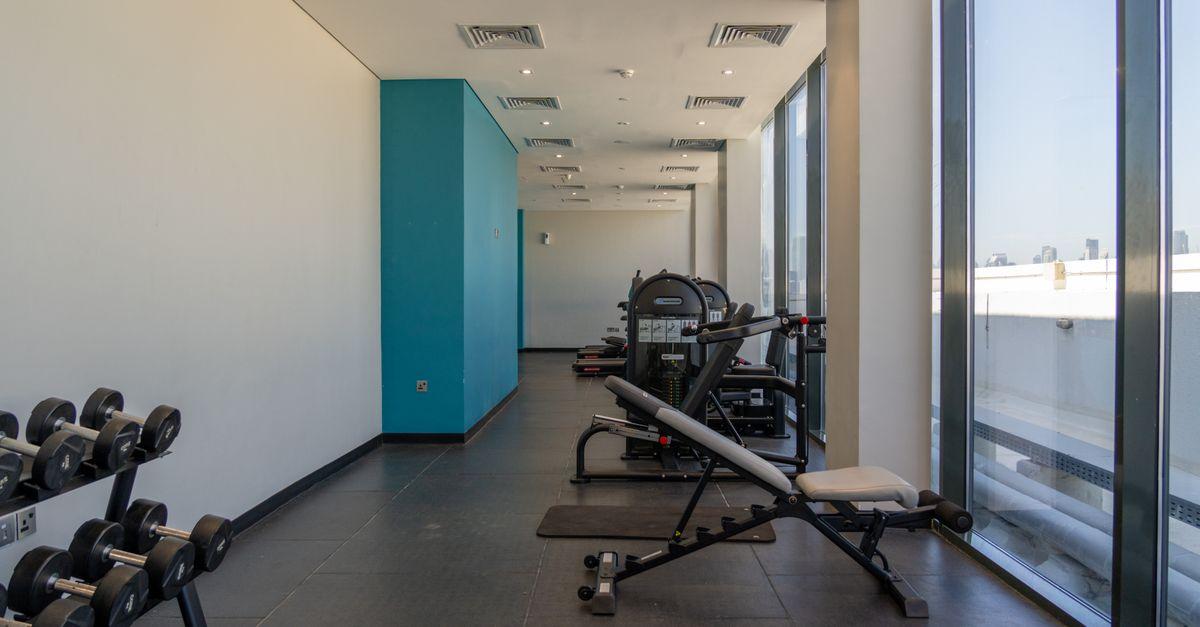
Why gym management software in the UAE is different
A gym in Dubai or Abu Dhabi runs on a different rhythm than a gym in London or New York. Memberships are heavily weighted toward annual contracts paid up front or in 12 installments. Member communication runs on WhatsApp, not email. Peak operating hours shift around Ramadan and the summer exodus. Payment rails default to Apple Pay, Mada, and tabby, not Visa-direct. Front desk teams are multilingual, with English as the operational language and Arabic as the cultural default.
Most gym management software is built for the US or UK market and then localized. The localization is usually skin-deep: an Arabic label on a button, an AED currency dropdown, and a sales rep who can pronounce "Dubai." Underneath, the platform assumes your members pay with US credit cards, your staff emails reminders, and your operation runs 9-to-5 every day of the year.
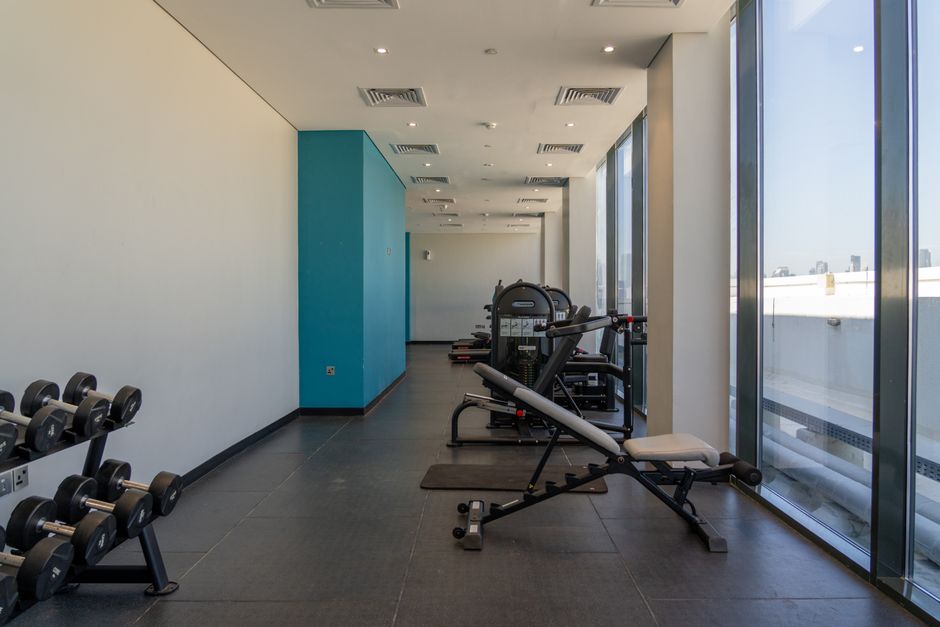
This guide lists the nine features that actually matter for a UAE gym operation, and the four features vendors love to demo that you should ignore.
The 9 features that actually matter
1. Live multi-branch calendar
If you operate more than one location, the calendar has to be live across branches in the same second. A booking made at branch B at 10:13 PM has to show up at branch A's front desk before the member walks in the next morning. Desynced calendars cause double-bookings, frustrated members, and front desk phone calls that should never happen.

2. AED billing with native regional payment support
Your members pay with Apple Pay, Mada, Knet, benefitPay, and tabby-style installments. If your checkout drops them to a USD 3DS page, conversion drops 20 to 30 percent on the first attempt. Pricing should display in AED at checkout, refunds should clear in AED, and your finance team should never deal with an FX surprise.
3. Automated memberships with smart dunning
Manual membership renewals are where UAE gyms lose the most revenue. The card declines, the front desk doesn't follow up for 72 hours, the member cancels, the slot stays empty, and the gym writes off the revenue. Smart dunning auto-retries the declined card, notifies the member via WhatsApp, holds the slot for 48 hours, and only escalates to the front desk if the retry fails. The whole loop should run without human intervention.
4. 24/7 access control
Most UAE gyms operate 24/7, especially in Dubai and Abu Dhabi where members train at 11 PM or 5 AM. Your software needs to integrate with the door access system so a member whose membership is active can open the door at 3 AM without calling the front desk, and a member whose membership has lapsed cannot. Integration with the major UAE access control vendors is a non-negotiable feature for any gym running around-the-clock operations.
5. WhatsApp-grade member reminders
Email open rates in the UAE are below 15 percent. WhatsApp open rates are above 90 percent. If your software sends class reminders by email, your no-show rate will stay high. The platform should send WhatsApp reminders natively (not via a third-party bolt-on), with the member's name, the class, the time, and a one-tap cancel button.
6. Member-facing app
Members in the UAE expect an app, not a web portal. The app should let them book classes, freeze memberships, update payment methods, view their attendance history, and check in on arrival, without forcing them to a browser redirect. The app should also be available in Arabic and English, with the language preference carried across all touchpoints.
7. Staff scheduling and payroll export
Most UAE gyms operate with rotating shifts across personal trainers, group class instructors, and front desk staff. The software should let you build a shift schedule by role and by branch, track actual hours worked, and export to your payroll system (typically a UAE-specific provider like Bayan, Zoho Payroll UAE, or a custom WPS file). Manual schedule-to-payroll reconciliation is a 6-to-10-hour-per-month task that software should automate.
8. Retail and point-of-sale
Every UAE gym sells supplements, apparel, water, and snacks. If your software can't ring up a retail sale at the front desk and tie the revenue to the same reporting view as memberships, your finance team is reconciling two ledgers by hand. A native POS module is worth more than a separate POS integration.
9. Real-time reporting
The general manager should be able to open a dashboard on a Monday morning and see the previous week's utilization, revenue, member churn, and instructor productivity by branch. If your reporting is a 7-day-delayed spreadsheet, you are managing last month's operation, not this morning's. Look for real-time dashboards with branch-level, instructor-level, and class-level drill-down.
The 4 features to ignore
Vendors love to demo features that look impressive but don't move the operational needle. Save your evaluation energy for the nine features above and treat the four below as decoration.
Ignore 1: AI-driven personalization without clean data
"AI-driven class recommendations" is a great slide and a useless feature in year one. It depends on having at least 12 months of clean member behavior data, which most UAE gyms don't have on day one. Buy the AI features when your data is ready, not when the vendor's sales deck is ready.
Ignore 2: VR class previews
Virtual reality class previews, immersive onboarding, and metaverse check-ins are pitch-deck filler. Your members care about booking a 6 AM CrossFit class without friction, not about whether the class preview is in 3D.
Ignore 3: Blockchain membership tokens
No UAE member is asking for a blockchain-based membership token. This is a vendor trying to differentiate on a technology that solves a problem no one has.
Ignore 4: Predictive churn scoring trained on the vendor's other customers
Churn scoring models trained on US gym members don't transfer well to UAE gym members. The seasonality, the membership contract structure, and the cultural signals are too different. If you want churn prediction, build it on your own data after 12 months of operation on the platform.
How to evaluate without 14 demos
Every vendor's discovery call asks the same five questions. Spend 30 minutes filling out a Wellness Systems Audit before you book a single demo. The audit maps your current operation against the nine features that matter and gives you a vendor shortlist based on regional fit, total cost, and post-launch support, not on who has the most polished demo.
Then book three demos, not fourteen. Run the same nine-feature checklist with each vendor. The vendors who tick all nine without flinching are the ones worth a contract. The ones who defer three or more to "future releases" are the ones to walk away from.
What to do next
If you operate a single gym or twenty across the UAE, the first move is the same: map your operation against the nine features that actually matter and compare vendors honestly. The Wellness Systems Audit gives you both, in 30 minutes, with a deliverable you keep whether you buy from us or not.